
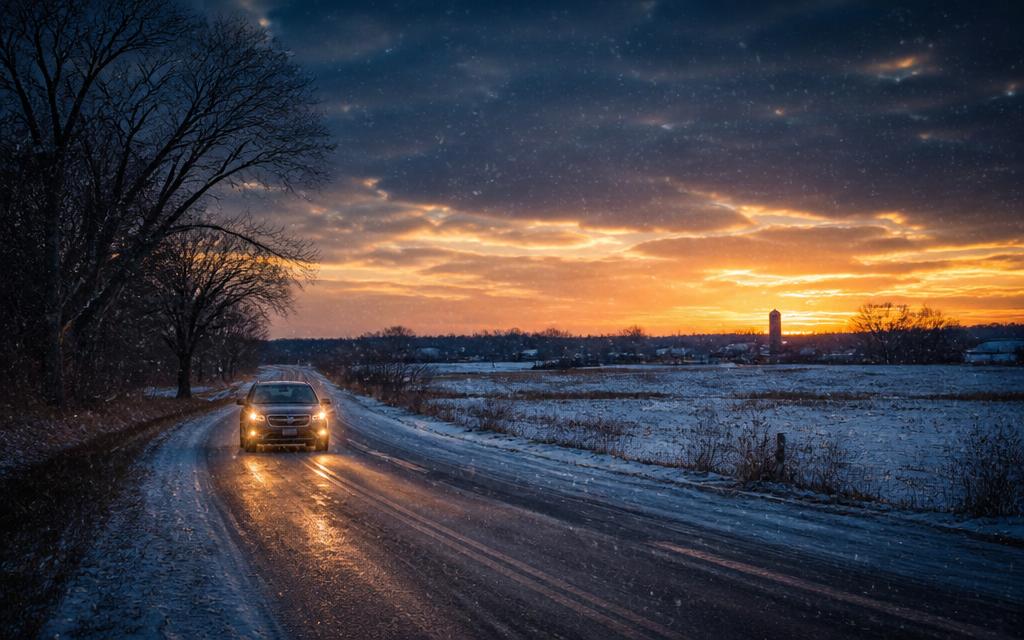
Winter in Northern Illinois arrives fast and stays long. Between lake-effect snow, sudden freeze-thaw cycles, and rural roads that don't always see the plow first, driving from November through March takes extra care. The good news is that most winter auto claims are preventable with the right preparation and habits.
Here is what we tell our Fox Lake, Antioch, McHenry, and Lakemoor neighbors every year before the first major storm.
1. Build a Winter Emergency Kit
If you slide off a rural road or get stuck behind a closed highway, you may be waiting an hour or more for help. Keep a blanket, flashlight, jumper cables, a small shovel, ice scraper, sand or kitty litter for traction, bottled water, and non-perishable snacks in the trunk. A charged portable battery pack for your phone is essential.
2. Check Tires Before the First Freeze
All-season tires harden in cold temperatures and lose grip. If you commute on Route 12, Route 31, or any of the lake-country back roads, consider investing in winter tires. They provide better handling, shorter stopping distances, and improved safety on snow and ice compared to worn all-season tires.
3. Slow Down and Increase Following Distance
Black ice is nearly invisible, especially on bridges, overpasses, and shaded curves. Reduce your speed before you reach a problem area, not while you're in it. Leave at least six seconds of following distance in winter conditions so you have room to stop without sliding into the vehicle ahead.
4. Know How to Handle a Skid
If your rear wheels skid, steer gently in the direction you want the front of the car to go. Do not slam the brakes. If your vehicle has anti-lock brakes, press the brake pedal firmly and hold it. If you do not have ABS, pump the brakes gently. Stay calm and avoid overcorrecting.
5. Review Your Auto Insurance Before Winter
Make sure your auto insurance coverage matches how you actually drive in winter:
- Collision coverage pays for damage if you hit ice and slide into another vehicle or object.
- Comprehensive coverage handles damage from falling tree limbs, hail, or flooding from ice melt.
- Rental reimbursement helps if your car is in the shop for a week after a winter accident.
- Towing and labor coverage is inexpensive and pays for itself the first time you need a tow on a snowy night.
Which Winter Coverages Are Worth It for You
Not every driver needs every add-on. Here's how we help people decide before the snow flies.
| Your situation | What to prioritize | Reasoning |
|---|---|---|
| Older vehicle worth under about $4,000 | Liability plus towing, think hard about collision | A payout capped at actual cash value may be less than a few years of collision premium and your deductible. |
| Newer or financed vehicle | Collision, comprehensive, and a lower deductible | Lenders require it, and winter body work runs high. |
| One-car household | Rental reimbursement | A week in the shop after an ice slide is a week without transportation. |
| Long rural or highway commute | Towing and labor, higher liability limits | More exposure on roads that get plowed late, and higher chance of a multi-car incident. |
| Teen driver in the household | Higher liability limits and an umbrella policy | Inexperienced drivers on ice are the single biggest liability exposure most families carry. |
What to Do at the Scene of a Winter Accident
- Get everyone to a safe spot away from traffic, especially on ice where other drivers may not stop in time.
- Call 911 if anyone is hurt or vehicles are blocking a lane.
- Photograph the vehicles, the road surface, and the weather conditions before anything is moved.
- Exchange insurance and contact information, and note the responding officer and report number.
- Call us. We will help you decide whether to file and walk you through the next steps.
Frequently Asked Questions
Am I at fault if I slide on ice?
Often yes. Illinois expects drivers to operate at a speed that's reasonable for conditions, so "the road was icy" rarely removes fault on its own. That's why collision coverage matters in winter.
Does insurance cover a pothole or salt damage?
Pothole damage falls under collision coverage and is subject to your deductible. Ordinary rust and corrosion from road salt is considered wear and tear and is not covered.
Is a windshield crack from a salt truck covered?
Yes, glass damage falls under comprehensive coverage. Many policies offer a reduced or waived glass deductible, and repairing a chip early is far cheaper than a full replacement.
Does my policy cover me if my car slides into a ditch and needs a tow?
Only if you carry towing and labor coverage or roadside assistance. It typically costs a few dollars a month and covers most of a winter tow.
Do winter tires lower my premium?
Not directly in Illinois, but they reduce the chance of an at-fault claim, and a clean record is what keeps your rate down long term.
Get Your Winter Coverage Checked
A quick policy review takes less time than you think. If you are not sure what your current auto insurance in Fox Lake covers, we will walk through it together and show you what each option costs.