
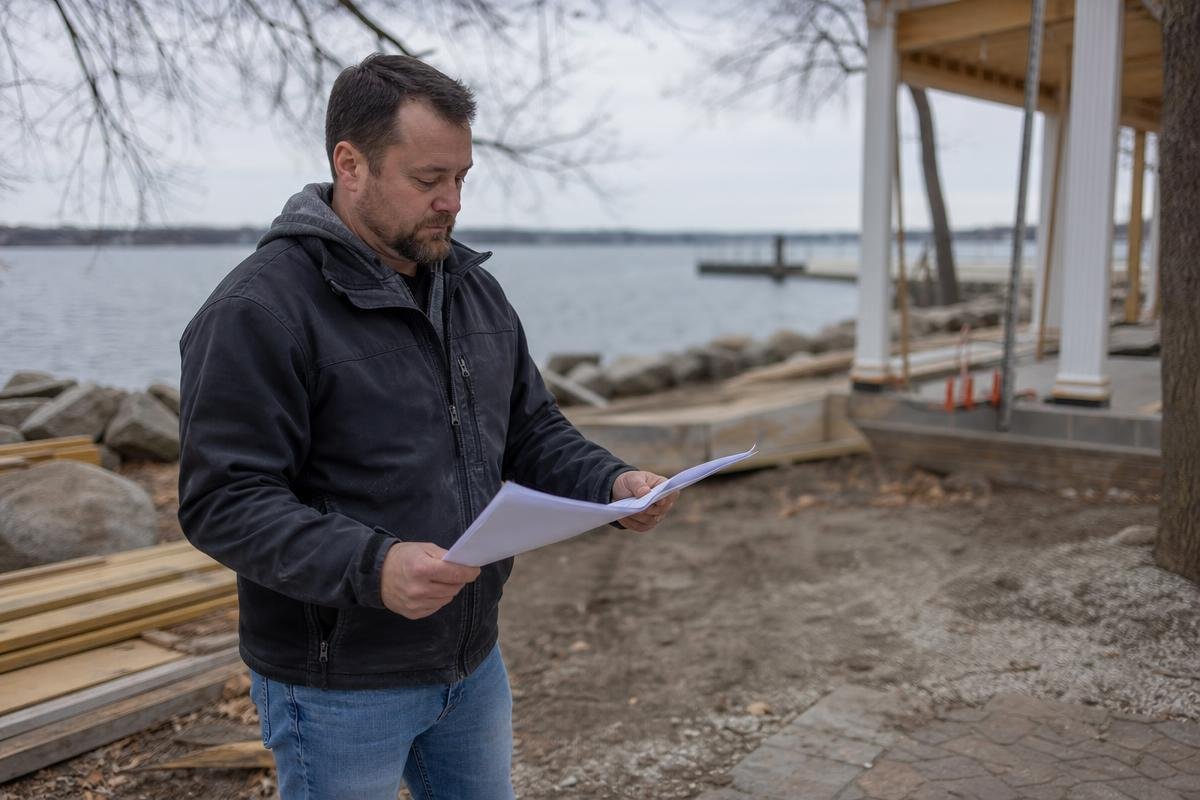
If you're a contractor working in Fox Lake or anywhere in Lake County, you've probably been asked for proof of insurance before a permit gets issued. But knowing the difference between general liability vs. professional liability insurance matters just as much as having a policy. These two coverages protect you from very different risks, and buying the wrong one, or skipping one entirely, can leave you exposed.
We help local contractors sort this out every day. Tell us about your trade and we'll recommend the right coverage before your next permit deadline.
Key Takeaways
- General liability covers physical damage and bodily injury claims that happen on a job site.
- Professional liability covers financial damages from errors, bad advice, or failures in your professional services.
- Many Fox Lake contractors need both policies, especially those doing design-build, inspections, or dock work.
- Understanding general liability vs. professional liability insurance helps you avoid coverage gaps that standard policies won't fix.
- Fox Lake village building permits typically require a certificate of insurance before work can begin.
Picture this. You land a dock renovation job on the Chain O'Lakes waterfront. The property owner asks for your certificate of insurance before you lift a single board. You hand over your policy, and they ask: "Does this cover professional errors too?" You freeze. That moment is exactly why understanding business liability insurance in Fox Lake, IL matters before a job is on the line.
Jablonski Insurance is a local agency based at 37 S Route 12, Ste 2 in Fox Lake, serving contractors and small business owners across Lake County, including Round Lake Beach, Grayslake, and Libertyville. Here is a plain-English breakdown of the core difference between general liability and professional liability, which trades need each policy, and whether your business needs both.
What Does General Liability Insurance Actually Cover?
General liability insurance is the foundation of any contractor's coverage. It pays for third-party bodily injury, property damage, and certain personal injury claims that happen because of your work. If someone gets hurt or something gets broken, GL is what steps in to cover the bills and your legal defense.
Bodily Injury and Property Damage
Bodily injury coverage pays third-party medical bills and your legal defense costs when a client, bystander, or neighbor is injured on or because of your job site. Property damage coverage pays when you accidentally damage someone else's property during the course of your work.
Here is a real scenario for contractors working in the Chain O'Lakes area.
A remodeling crew doing lakefront work near Nippersink Lake accidentally damages a neighbor's dock. General liability pays for the dock repairs and covers your legal defense if the neighbor decides to sue. Without GL, that bill comes straight out of your pocket.
Standard policy limits for small contractors run $1 million per occurrence and $2 million aggregate. Some commercial clients and municipalities require higher limits, often $2M per occurrence and $4M aggregate. Contractors working in Antioch on larger commercial projects should confirm what limits their clients require before signing a contract. If you need higher limits, ask us about pairing your GL with a commercial umbrella policy to close that gap affordably.
Personal and Advertising Injury
This part of GL covers libel, slander, copyright infringement in your advertising, and wrongful eviction claims. It matters more than most contractors realize. If you use unlicensed stock photos on your website or make a claim in a social media ad that a competitor disputes, this coverage responds. It is not just for big companies with marketing departments.
What GL Does NOT Cover
General liability has real gaps. It does not cover:
- Your own tools and equipment (you need an inland marine or equipment floater policy for that)
- Employee injuries on the job (that is workers' compensation)
- Financial losses a client suffers because of a professional mistake, a design error, or bad advice you gave
That last gap is the most important one. If a client claims your work plan or recommendation caused them financial harm, GL will not respond. That is exactly what professional liability insurance is built to cover. We will break that down in the next section. In the meantime, you can explore your contractor insurance options in Lake County to see how these policies work together.
What Does Professional Liability Insurance Cover?
Professional liability insurance covers financial damages a client suffers because of a mistake, oversight, or failure to deliver a promised service. No physical damage required. If your advice, design, or professional judgment causes a client to lose money, this policy responds. It goes by several names: professional liability, errors and omissions insurance, or simply E&O.
Errors, Omissions, and Negligent Advice
Think about a home inspector working on a lakefront property near Lake Villa. They miss a foundation crack. The buyer closes, discovers the problem, and faces $40,000 in repairs. That inspector never touched the foundation. There was no property damage they caused directly. But a claim is coming, and general liability will not cover it.
The same exposure applies to architects whose plans contain a structural error, IT consultants whose software recommendation causes data loss, or bookkeepers who file incorrect tax documents. The common thread: a financial loss tied to professional judgment, not a physical accident. Those financial claims are precisely what an errors and omissions insurance policy exists to pay.
Claims-Made vs. Occurrence and Why Policy Structure Matters
This is the part most contractors get wrong. Professional liability policies are almost always claims-made. That means the policy active when the claim is filed must be in force, not just the policy active when the error happened.
General liability works differently. It is typically occurrence-based, meaning the policy in place when the incident happened covers the claim, even years later. With professional liability, if you let your policy lapse or switch carriers without purchasing tail coverage (called an extended reporting period), work you did last year may have zero protection today.
If you are switching carriers or winding down your business, talk to our agents about tail coverage before you cancel anything. You can also schedule a business coverage review to make sure there are no gaps in your protection. Get a quote for contractor liability coverage that fits your trade, not a generic template.
Who Needs Professional Liability in Fox Lake?
If you provide design, advice, inspections, or consulting as part of your work, you likely need professional liability insurance in Illinois. That includes:
- Architects and structural engineers
- Home inspectors
- IT and technology consultants
- Accountants and bookkeepers
- Real estate agents
- Design-build contractors who provide both labor and design services
A pure labor subcontractor following someone else's approved plans may need only general liability. But the moment you are offering professional judgment, a separate E&O policy belongs in your coverage stack. The Chain O'Lakes area draws seasonal homeowners who hire inspectors and design-build contractors every spring. One missed defect on a lakefront property can turn into a serious claim fast.
Side-by-Side Comparison of General vs. Professional Liability
Physical Events vs. Professional Errors
Here is the clearest way to separate these two policies. General liability insurance responds to physical events: bodily injury, property damage, something tangible that goes wrong on a job site. Professional liability responds to financial harm caused by a mistake in your advice, design, inspection, or professional judgment. One covers what your hands do. The other covers what your mind does.
Coverage Comparison at a Glance
| Factor | General Liability | Professional Liability |
|---|---|---|
| What triggers a claim | Bodily injury or property damage | Professional error, omission, or bad advice |
| Who is protected | Third parties harmed by physical incidents | Clients who suffer financial loss from your work |
| Typical policy structure | Occurrence-based | Claims-made |
| Common industries | Landscapers, roofers, general contractors | Home inspectors, designers, engineers |
| Avg. small-business cost | $500 to $1,500 per year (low-risk) | $500 to $2,000 per year (varies by revenue) |
Actual costs depend on your carrier, trade, payroll, and claims history. These ranges give you a starting point, not a final number.
Real Claim Scenarios From the Fox Lake Area
Scenario A (GL only): A landscaping crew working on a Chain O'Lakes lakefront property knocks over a retaining wall and damages the homeowner's boat dock. That is a property damage claim. General liability responds. Note that homeowners in Fox Lake may also have their own policy involved, so claims can get complicated fast.
Scenario B (PL only): A home inspector in the Grayslake area misses a significant roof defect. The buyer discovers it after closing and sues for repair costs. No physical damage happened during the inspection itself. Professional liability covers the defense costs and any settlement.
Scenario C (both): A design-build contractor in the Round Lake Beach area provides both architectural drawings and construction labor. A wall collapses during framing. General liability responds to the physical damage. The client then claims the original design spec was flawed. Professional liability responds to that separate allegation. Two policies, one project, two very different triggers.
Ready to see which policies apply to your trade? Schedule a business coverage review with our team.
Do Fox Lake Contractors Need Both Policies?
Not every contractor needs both. The answer depends on what you actually do on the job. If you follow someone else's plans and work with your hands, general liability insurance for contractors may be all you need. If you give advice, design, or manage a project, you likely need both.
When General Liability Alone Is Enough
Pure trade contractors who work from pre-approved plans are typically covered by GL only. Think drywall subcontractors, concrete flatwork crews, or painters working from a client's color spec. You are executing, not deciding. No one is relying on your professional judgment to make a financial or design decision. In that case, a solid GL policy covers your exposure.
Dock builders and seasonal lakefront crews working around the Chain O'Lakes fall into this category too, as long as they are building to a spec someone else provided. Residential landlords who hire contractors for routine repairs are generally looking for GL coverage and a certificate of insurance before work starts. Nothing more.
When to Add Professional Liability
Add professional liability, also called errors and omissions insurance, when any of these apply:
- You produce written specifications, drawings, or design documents
- A client relies on your advice to make a financial or project decision
- You hold a professional license, such as architect, engineer, or home inspector
- You manage subcontractors and provide project oversight without performing physical work yourself
General contractors who run projects in the Libertyville area often carry PL exposure even if they never pick up a tool. Managing a job site and directing subs counts as professional judgment. If something goes wrong with the schedule, budget, or design coordination, a GL policy will not cover that claim. You need a business insurance policy that includes both layers.
Certificate of Insurance Requirements in Fox Lake
The Village of Fox Lake requires a certificate of insurance before issuing a building permit, and the village Building Department typically verifies that a licensed contractor's coverage is current before a project can begin. Most commercial property owners and marina operators along the Chain O'Lakes require one before you set foot on site. The document contractors use is called an ACORD 25. It shows your policy type, coverage limits, named insured, and any additional insured endorsements a client needs.
You should be able to get one issued quickly when a client calls. Our team can do that. Request a certificate of insurance and we will get it to you fast so your job does not get held up waiting on paperwork.
Need a certificate of insurance or not sure which policies your contracting business requires? Call us at (847) 587-3200 and we will sort it out with you.
How to Buy the Right Coverage for Your Fox Lake Business
Buying business liability insurance doesn't have to be complicated. But buying the wrong coverage absolutely can be. Here's how to get it right before you sign anything.
Step 1: Identify Your Real Exposure
Start by asking yourself a few honest questions. Does your work involve physical labor on someone else's property? Do you give professional advice or design work that clients rely on? Do you hire subcontractors? Do your commercial clients require you to name them as additional insureds on your policy?
If you work near the water, add one more question: do you use a boat or watercraft for business purposes? Dock builders, boat lift installers, and lakefront remodelers in the Round Lake Beach and Grayslake areas face exposures that generic online carriers often miss. Boat and watercraft insurance is a separate layer of protection worth reviewing if your work takes you on the water.
Step 2: Choose the Right Limits and Deductibles
For general liability, most small contractors start at $1M per occurrence and $2M aggregate. Some commercial clients require $2M/$4M before they'll let you on site. Check your contracts before you assume the standard limits are enough.
For professional liability, your limits should reflect the size of the projects you take on. A home inspector working on a $200K property has different exposure than a designer planning a $2M lakefront build in Libertyville. Professional liability deductibles are typically per-claim, ranging from $1,000 to $10,000. A higher deductible lowers your premium but raises your out-of-pocket cost on smaller claims. Think carefully before chasing the cheapest option.
Step 3: Work With a Local Agent Who Knows Your Trade
The right coverage depends on details a generic online quote form never asks about. Whether you produce design documents. How many subs you carry. What your contracts require for additional insured endorsements. Whether any of your work happens on or near the water. Our agents ask those questions before recommending anything, so your GL and professional liability limits actually match the jobs you take on instead of a template built for a business that looks nothing like yours.
Our team holds a 4.9-star rating across 1,066 reviews. Clients describe us as "detailed and informative" and "very helpful and personable." See what Fox Lake business owners say about working with us, and learn more about our team before you call.
Why Fox Lake Contractors Choose Jablonski Insurance
We are a local agency based right here in the 60020 ZIP code at 37 S Route 12, Ste 2. We know the difference between insuring a general contractor in Grayslake and one doing dock construction on the Chain O'Lakes. That local knowledge matters when you are buying business liability insurance in Fox Lake, IL.
A policy bought through a website is built from a form. Yours gets built from a conversation. Our agents look at what you actually do on a job site, what your contracts require, and where your real exposure sits, then structure your GL, professional liability, and commercial umbrella coverage around it. One size does not work for a lakefront remodeler the same way it works for a Libertyville IT consultant.
Contractors across Lake County tell us the same thing: our team takes time to explain what you are buying. Rebecca Krause called our service "detailed and informative." Rachel Hopp described us as "very helpful and personable." That is not an accident. Team members like Kate, Jessica Mascenic, and Karla approach every conversation the same way. We currently hold a 4.9-star rating across 1,066 reviews, and we take that seriously.
Stop by our Fox Lake office at 37 S Route 12, Ste 2 or schedule a full business insurance review at your convenience. If you need errors and omissions insurance in Fox Lake or just want someone to walk through your current policies, we are here. See what other Lake County business owners say about working with our team.
Frequently Asked Questions
Is General Liability Required by Law in Illinois?
Illinois has no single statewide mandate requiring all contractors to carry GL. That said, local municipalities matter. Contractors working within the village limits near Round Lake Beach, Grayslake, and Libertyville typically must show a certificate of insurance before a building permit is issued. Most commercial clients require GL proof as a contract condition too. No GL certificate often means no permit and no job.
What Is the Difference Between E&O and Professional Liability?
They are the same thing. Errors and omissions insurance is the common term in tech, consulting, and financial services. Professional liability insurance is the broader term used across most other industries. Both cover financial damages caused by a professional mistake or a failure to deliver a promised service. If you hear either phrase, think the same coverage.
Can I Get GL and PL on the Same Policy?
A Business Owners Policy can bundle GL with property coverage. A small number of specialty carriers offer combined GL and PL packages for specific professions. For most contractors, though, the two policies are purchased separately. Our agents can coordinate both so there are no gaps between them.
What Does Business Liability Insurance Cost in Fox Lake?
GL premiums for low-risk contractors typically start around $500 to $1,500 per year. Professional liability for small firms generally runs $500 to $2,000 per year, depending on your revenue, profession, and claims history. Those are industry averages. Your actual number depends on what you do and where you work. Call us at (847) 587-3200 for a real quote.
Does My GL Policy Cover My Subcontractors?
Generally, no. Your GL policy does not automatically cover a subcontractor's independent negligence. Require every subcontractor to carry their own GL and name you as an additional insured. If an uninsured sub causes a claim, the injured party may come after your policy instead.
What Happens If My Professional Liability Policy Lapses?
A claims-made PL policy will not cover a claim filed after the policy lapses, even if the error happened while coverage was active. Tail coverage, also called an extended reporting period, protects you after a policy ends. Ask your agent about tail coverage any time you switch carriers or wind down a business.
Ready to make sure your business has the right coverage? Call Jablonski Insurance at (847) 587-3200 or schedule a business coverage review online. Our team will look at what you actually do, where you work, and what your clients require. Then we find the GL, PL, or combined coverage that fits. No guesswork. No gaps.
Ready to Get Started with Jablonski Insurance?
Call (847) 587-3200 to speak with our team directly. We're ready to answer your questions, walk you through your options, and help you find the right solution for your needs. Whether you're just starting to plan or ready to move forward, we'll make the process simple and stress-free.
Reach out today and let's talk about how we can help.