
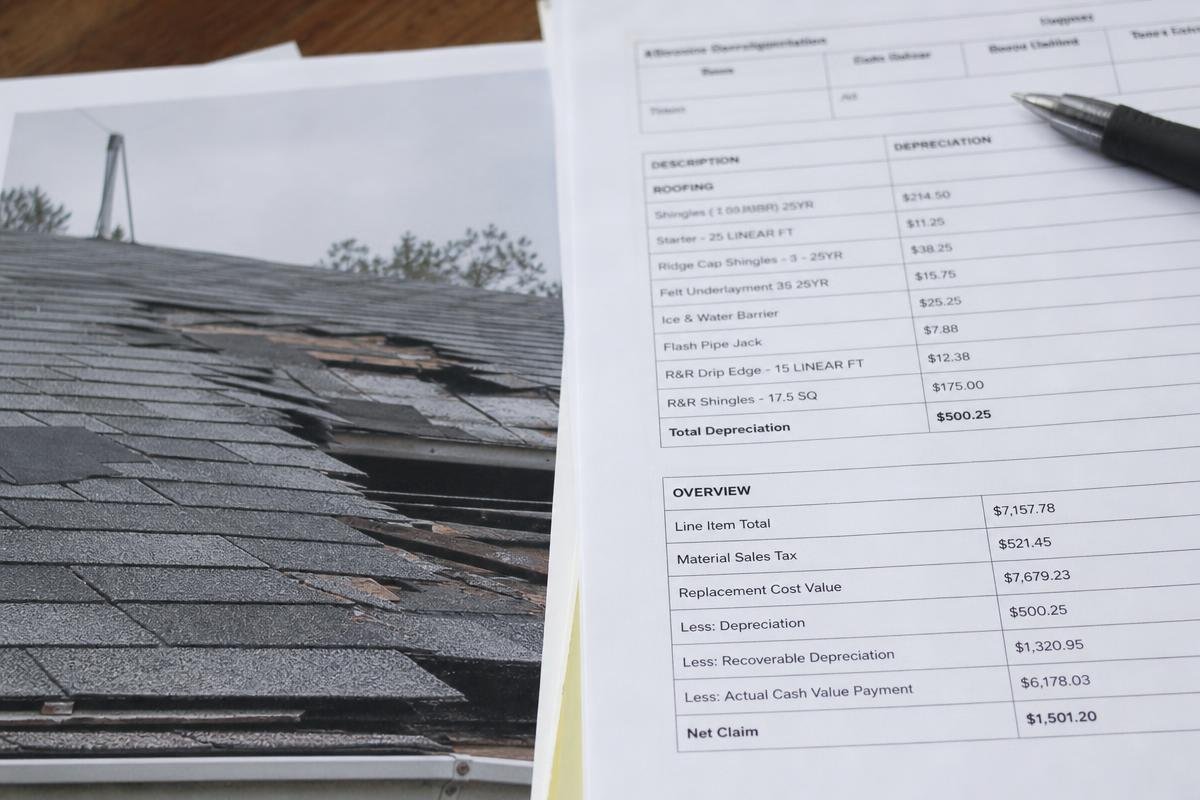
Your home insurance payout depends on one policy detail most Fox Lake homeowners never notice until they file a claim: actual cash value vs replacement cost. These two coverage types can mean the difference between a full rebuild and a check that barely covers half the job, especially with local rebuild costs running high on waterfront and near-water properties along the Chain O'Lakes.
Jablonski Insurance is a locally owned agency staffed by Illinois-licensed agents, and we help neighbors pick the coverage that actually matches what their home is worth to rebuild today. Not sure which coverage type fits your Fox Lake property? Let's look at it together.
Key Takeaways
- Actual cash value pays your claim minus depreciation, while replacement cost covers what it actually costs to rebuild today.
- Fox Lake waterfront and near-water homes often carry higher rebuild costs than standard ACV payouts reflect.
- Freeze-thaw cycles and spring hailstorms in Lake County accelerate roof wear, making replacement cost coverage especially valuable here.
- Manufactured homes, condos, and single-family homes in the 60020 zip code each carry different ACV vs replacement cost risk profiles.
- Choosing the wrong coverage type is a common and costly mistake that a local review can catch before a claim hits.
Why Did Your Insurance Check Come Up Short?
Your insurance check came up short because your policy pays actual cash value, not replacement cost. A hailstorm rolls off the Chain O'Lakes and tears up your roof. You file a claim expecting to cover the repair bill. Then the check arrives and it's hundreds, maybe thousands, less than what the contractor quoted. That gap has a name: depreciation.
This is one of the most common calls we get at Jablonski Insurance. The policy paid what the damaged item was worth after depreciation, not what it costs to replace it today. Those are two very different numbers, and the difference comes down to which type of coverage you carry. Round Lake Beach manufactured home owners and Antioch lakefront homeowners run into this gap regularly, because both property types carry rebuild costs that a depreciated payout rarely matches.
Here is a plain-English breakdown of actual cash value vs replacement cost. You will learn how depreciation is calculated, which policy pays more at claim time, and how to choose the right coverage for your home, car, boat, or rental property. If you are already thinking about your home insurance coverage options, this will help you read your policy with fresh eyes.
Ready to check what your current policy actually pays? Schedule a policy review with our team and we will walk through it together.
What Is Actual Cash Value Coverage and How Is It Calculated?
Actual cash value (ACV) is the amount your insurer pays for a covered loss after subtracting depreciation from the item's original replacement cost. The formula is simple: ACV = Replacement Cost minus Depreciation. What trips people up is how much that depreciation number can shrink a payout.
Here is a real example. Say you have a roof that cost $12,000 to install ten years ago. Today, a new roof runs $15,000. Your insurer looks at the roof's expected lifespan, maybe 20 to 25 years, and determines it has depreciated 40 to 50 percent. Your ACV payout lands between $6,000 and $7,200. You are left covering the rest out of pocket.
That gap matters. And in Lake County, where harsh winters and severe spring weather wear roofs down faster than in milder climates, roofs age quickly. Depreciation in home insurance claims hits harder here than homeowners often expect.
How Depreciation Reduces Your ACV Payout
Insurers use depreciation schedules to assign a value loss to your property over time. Roofing materials, appliances, flooring, and personal property all depreciate at different rates. Illinois does not mandate a single depreciation method, so the schedule your carrier uses may differ from another carrier's. Two Lake County homeowners with identical homes and identical damage could receive different ACV payouts depending on their policy and carrier.
Items like HVAC systems and kitchen appliances depreciate fast. A ten-year-old refrigerator might be worth a fraction of what it costs to replace today. That is how insurance claims are calculated under ACV policies, and it catches a lot of people off guard at claim time.
When ACV Coverage Makes Sense
ACV coverage is not always the wrong choice. It can be appropriate in a few specific situations.
- Older vehicles where the market value is already low
- Rental properties where you have already factored depreciation into your investment model. A landlord insurance policy with ACV coverage can keep premiums lower when the math works in your favor.
- Watercraft with high mileage or heavy seasonal use, where a depreciated payout roughly matches what you could sell the boat for anyway
One important exception: classic or collector vehicles. Standard depreciation schedules do not reflect agreed or stated value, so ACV coverage almost never works for those. If you own a collector car, look at classic car insurance with agreed value coverage instead.
Pontoon boats and ski boats popular on the Chain O'Lakes are another case worth watching. A five-year-old pontoon that cost $45,000 new might settle for only $28,000 under an ACV policy, which does not buy you a comparable replacement. If you count on your boat holding real value, that shortfall is exactly the kind of gap agreed value coverage was built to close, and we cover the watercraft side in more detail further down.
What Is Replacement Cost Coverage and Why Does It Pay More?
Replacement cost value (RCV) pays what it actually costs to repair or replace a damaged item with a new one of similar kind and quality, without subtracting depreciation. That one difference changes everything at claim time.
Remember the $15,000 roof example from the ACV section? With replacement cost coverage, your insurer pays that full amount minus your deductible, regardless of how old the roof was. That is thousands more than the depreciated ACV payout on the same claim, and it is money you would otherwise cover out of pocket.
Replacement Cost for Homes vs Personal Property
Most standard home insurance policies cover the dwelling itself at replacement cost. That means if a hailstorm tears up your roof or a fire damages your walls, the insurer pays to rebuild at current material and labor costs. That matters in Lake County, where contractor rates and lumber prices have climbed steadily.
Here is where many policyholders get surprised. Personal property, meaning your furniture, electronics, and appliances, often defaults to ACV unless you specifically add replacement cost for contents. You file a claim on a water-damaged couch and expect $1,200. You get $400 because it was six years old. That is a real scenario, not a hypothetical.
The same gap hits renters hard. A renters insurance policy with ACV personal property coverage pays depreciated value on a stolen laptop or ruined furniture. Most renters do not realize this until they are staring at a claim check that does not cover a replacement.
Extended and Guaranteed Replacement Cost and Why It Matters
Standard replacement cost coverage pays up to your policy limit. If rebuilding costs more, you cover the difference. Two endorsements fix that problem.
- Extended replacement cost adds a cushion, typically 20 to 50 percent above your policy limit. So a $300,000 dwelling limit could stretch to $450,000 if rebuild costs spike.
- Guaranteed replacement cost removes the cap entirely. Your insurer pays whatever rebuilding actually costs, no ceiling.
In Lake County, this matters more than in most places. After a major storm, contractor demand surges across the region. Materials get backordered. Labor costs jump. A rebuild that was estimated at $280,000 before the storm can easily run $340,000 or more by the time crews are available.
Extended or guaranteed replacement cost protects you from that timing problem. If you are not sure which coverage your current policy includes, that is worth a quick review. Schedule a policy review and we can walk through exactly what your dwelling and contents coverage pays out on a real claim.
How ACV and Replacement Cost Apply to Auto, Boat, and Specialty Policies
Home insurance gets most of the attention in ACV vs replacement cost conversations. But the same gap shows up in auto, boat, and collector vehicle policies, and in Lake County, those gaps can be significant. Here is how insurance claims are calculated across each product line, and where standard coverage tends to fall short.
Auto Insurance and Why Your Car Claim May Come Up Short
Total-loss auto claims default to ACV. That means the insurer pays what your vehicle was worth on the market immediately before the loss, not what you paid for it and not what a comparable replacement costs today. Used vehicle prices have stayed elevated, so the spread between what your insurer pays and what you actually need to replace the car has widened for a lot of drivers.
If you are financing your vehicle, that gap can leave you owing money on a loan for a car you no longer have. Gap insurance covers exactly that shortfall. It is an inexpensive add-on and worth a conversation if you carry a loan balance. Learn more about auto insurance options for Lake County drivers and how your current policy handles a total loss.
Boat and Watercraft Coverage and Agreed Value vs ACV
The Chain O'Lakes is one of Illinois' most active recreational boating areas. A lot of families in this community own pontoon boats, ski boats, and personal watercraft that represent real money. Standard boat policies often pay ACV at total loss, which means depreciation comes out of your payout. As noted earlier, a five-year-old pontoon that cost $45,000 new might settle for $28,000 under ACV. That does not buy you a comparable replacement.
Agreed value policies work differently. You and the insurer agree on the vessel's value at policy inception. At total loss, that full agreed amount is paid with no depreciation deduction. One thing policyholders often miss: hull coverage, motor, and trailer can each be valued differently on the same watercraft policy. That creates gaps people do not see coming until they file a claim.
Ask us specifically how each component is valued on your boat and watercraft policy before you assume you are fully covered.
Classic and Collector Vehicles and Why Standard Depreciation Falls Short
Standard ACV schedules assume vehicles lose value over time. A restored classic does the opposite. A well-documented restoration can significantly increase a vehicle's value, and a standard auto policy will not reflect that. We are a Hagerty authorized agency, which means we can write agreed value classic car coverage that pays the full insured value at total loss, no depreciation applied.
The same problem affects custom motorcycles. Factory ACV schedules do not account for custom components, so a heavily modified bike is almost always undervalued under a standard policy. If you own a custom build, ask us about motorcycle coverage that actually reflects what the bike is worth.
Own a boat, classic car, or financed vehicle in Lake County? Call us at (847) 587-3200 to review how your current policy handles a total loss. The gaps are fixable before a claim happens.
Which Coverage Type Is Right for Your Fox Lake Property?
There is no single right answer here. The best choice depends on your property type, your financial cushion, and what your lender requires. As we covered earlier, ACV pays out after depreciation is subtracted, while replacement cost covers what it actually costs to rebuild or replace today. Now let's talk about which one fits your situation.
Questions to Ask Before Choosing ACV or Replacement Cost
Walk through these five questions before you decide:
- How old is the property or the item being insured? A 20-year-old roof carries significant depreciation. An ACV payout on that roof could leave you thousands short.
- Could you cover the depreciation gap out of pocket? If a claim left you holding a $15,000 shortfall, would that be manageable? If not, replacement cost coverage is worth the higher premium.
- Is the asset appreciating or depreciating? Lake County construction costs have climbed. Your home likely costs more to rebuild today than it did five years ago. That gap matters.
- What does your lender or HOA require? If you carry a mortgage, your lender almost certainly requires replacement cost coverage on the dwelling. That removes the choice entirely for most financed properties.
- What is the actual rebuild cost in Lake County right now? Material and labor costs in northern Illinois have risen. An outdated dwelling valuation means your home insurance payout in the 60020 zip code may fall short when you need it most.
Our agents, including Rebecca Krause and Rachel Hopp, are known for being detailed and patient when walking clients through exactly these kinds of decisions. They will help you run the real numbers, not just pick a coverage type at random. If you want to talk through your specific situation, schedule a policy review and we will look at your current dwelling valuation together.
How Condo, Renters, and Manufactured Home Policies Handle This Differently
Property type changes everything here.
Condo owners carry an HO-6 policy, which covers your interior improvements and personal property, not the building shell. Your condo association's master policy handles the exterior. But here is the catch: whether your interior contents and upgrades are covered at ACV or replacement cost depends entirely on the policy form you choose. If your master policy has gaps, your condo insurance coverage needs to fill them at the right valuation level.
Renters face a similar decision on personal property. ACV on a five-year-old laptop pays very little. Replacement cost renters insurance costs only slightly more and pays what it actually costs to replace your belongings today.
Manufactured homes present a unique challenge, and Fox Lake and the surrounding 60020 area have a number of manufactured and mobile home communities where this matters. Standard replacement cost valuations often do not reflect the true cost to replace a manufactured home with a comparable unit, because factory-built structures are valued differently than site-built homes. Some carriers exclude manufactured homes from standard replacement cost forms altogether, and others cap the payout well below the cost to bring in and set a new unit.
If you own a manufactured home in Fox Lake or nearby Round Lake Beach, a standard policy may leave a significant gap. Specialized manufactured home insurance addresses this directly. Not sure where your property falls? Get a quote and we will match you to the right coverage form for your specific property type.
Why Fox Lake's Chain O'Lakes Location Makes Coverage Valuation Especially Important
Living along the Chain O'Lakes system is one of the best parts of being in the 60020 zip code. But that waterfront lifestyle comes with real insurance complexity. Properties here face rebuild costs, weather exposures, and valuation challenges that most generic insurance content never addresses.
Waterfront Properties and Elevated Rebuild Costs
Yes, living near the water affects what it costs to rebuild your home. Near-water properties in the Antioch and Grayslake corridor carry higher rebuild costs than comparable inland homes. Contractors charge more to work on lots with limited access. Materials cost more to deliver. Pier and dock structures add to the total replacement value that a standard dwelling limit may not fully capture.
If your coverage limit is based on an appraisal from five or more years ago, you may already have a gap. Construction costs in northern Illinois have climbed steadily. Even with home insurance coverage for your property, an outdated dwelling limit means replacement cost coverage can only pay up to what you insured for. We recommend reviewing your limits every two to three years at minimum. You can schedule a policy review with our team to check where you stand.
Seasonal Weather and the Case for Replacement Cost on Roofs and Structures
Northern Illinois freeze-thaw cycles are hard on roofs. Ice damming forms along eaves every winter. Spring hailstorms roll in off the open water with real force. A roof that is 10 to 12 years old has already accumulated significant depreciation in the eyes of an insurance adjuster.
Under ACV, that depreciation gets subtracted from your home insurance payout. A hail claim on an older roof might return far less than the actual repair bill. Replacement cost coverage removes that penalty. You get paid based on what a new roof costs today, not what your aging one was worth before the storm hit.
Commercial property owners in the Volo and Round Lake area face the same exposure. If you own a business structure, business insurance that includes replacement cost on your building protects you from the same depreciation gap that hits residential owners.
Frequently Asked Questions
What is the main difference between actual cash value and replacement cost?
ACV pays the depreciated value of what was lost. Replacement cost pays what it actually costs to replace it new. On a single claim, that gap can run into thousands of dollars. If you want to check which method your home policy uses, our home insurance coverage options page is a good starting point.
Will replacement cost coverage always pay the full rebuild amount?
No. Replacement cost pays up to your policy's coverage limit. If your home is underinsured, you still face an out-of-pocket gap even with replacement cost coverage. Getting the dwelling valuation right from day one is what protects you from that shortfall.
How does depreciation affect my home insurance claim payout?
Depreciation reduces your payout based on the item's age and condition. A 10-year-old HVAC unit depreciated by 50 percent turns a $6,000 replacement into a $3,000 ACV payout. Depreciation schedules vary by carrier and by item type, so the gap differs on every claim.
Is replacement cost coverage worth the higher premium in Fox Lake?
For most homeowners in the 60020 zip code, yes. The premium difference between ACV and replacement cost is typically modest compared to what you could be short on a major claim. This is exactly the kind of comparison our agents can show you in writing, so you can see the real dollar difference and decide for yourself.
Does my auto policy pay replacement cost or actual cash value after a total loss?
Standard auto policies pay ACV after a total loss. If you still owe money on a financed vehicle, gap insurance covers the difference between the ACV payout and your remaining loan balance. Our auto insurance policies can be reviewed to confirm what your current coverage pays.
How do I know if my current policy uses ACV or replacement cost?
Pull out your declarations page. Look for the terms "actual cash value," "replacement cost," or "RCV" in the loss settlement provision. That language tells you exactly how a claim will be paid. You can also call us directly at (847) 587-3200 and we will look it up with you on the spot.
Can the Jablonski Insurance team review my current coverage limits?
Absolutely. Agents Rebecca Krause, Kate, Rachel Hopp, and Jessica Mascenic know the local market and review policies regularly. Our team has earned 1,066 reviews averaging 4.9 out of 5 stars, and a coverage review costs you nothing. Schedule a policy review and we will walk through your declarations page line by line.
Not sure whether your current policy pays ACV or replacement cost? Call our office at (847) 587-3200 or contact us online to set up a review. We will show you exactly what you would receive at claim time and what it costs to close any gap. No pressure. Just a clear picture of where you stand.
Ready to Get Started with Jablonski Insurance?
Call (847) 587-3200 to speak with our team directly. We're ready to answer your questions, walk you through your options, and help you find the right solution for your needs. Whether you're just starting to plan or ready to move forward, we'll make the process simple and stress-free.
Reach out today and let's talk about how we can help.