
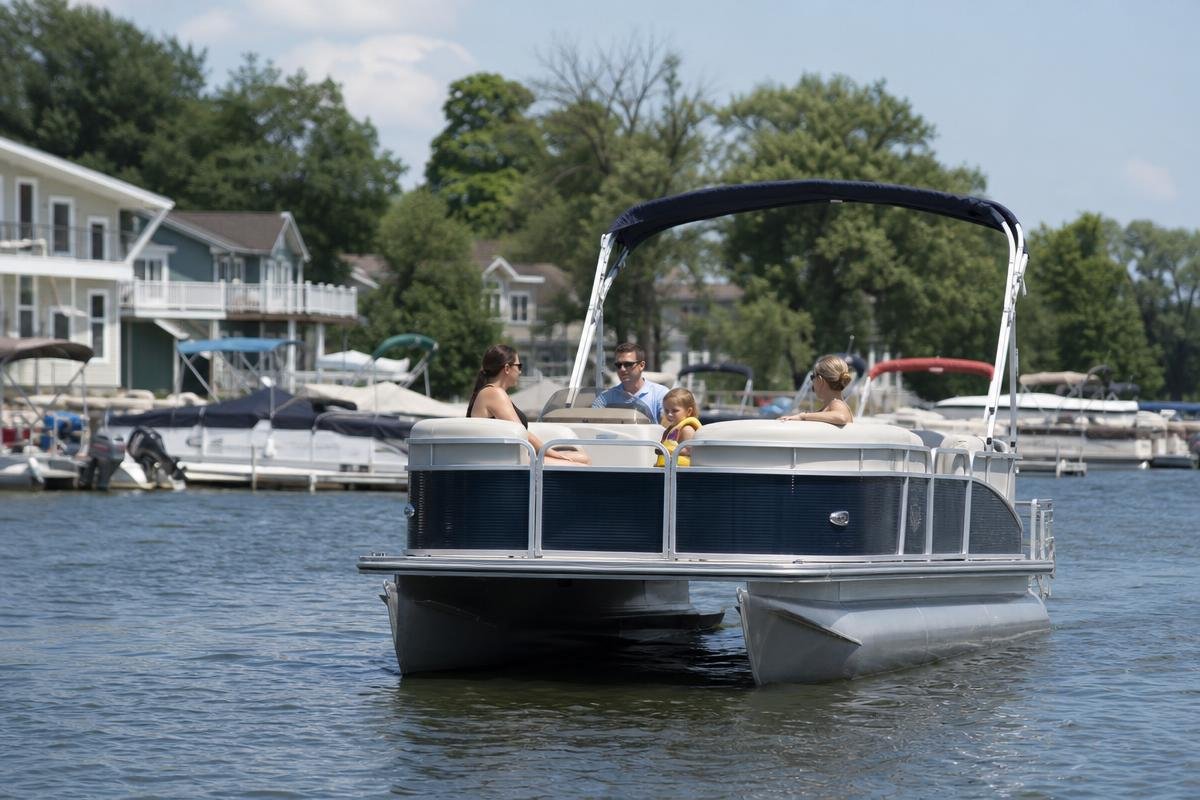
If you keep a boat on the Chain O' Lakes, you already know how busy those waterways get from Memorial Day through Labor Day. What you might not know is how many gaps a basic or borrowed policy can leave you with. Boat insurance coverage is not one-size-fits-all, and the details matter a lot when something goes wrong on the water. We are right here in Fox Lake at 37 S Route 12, Ste 2, and we help local waterfront owners find policies that actually fit how they use their boats.
Get the right boat coverage before you hit the water this season.
Key Takeaways
- Many marina slip agreements along the connecting channels require proof of liability coverage before you can dock.
- Boat insurance coverage typically includes physical damage, liability, medical payments, and emergency towing as separate components.
- Agreed Value policies pay a fixed amount at total loss, while Actual Cash Value policies factor in depreciation, which can leave you short.
- Personal watercraft and boat storage are often excluded from standard policies and need to be added separately.
- Local cost factors like boat type, horsepower, and how you store your vessel all affect what you pay in Fox Lake.
Why the Short Local Season Makes the Right Policy Matter
If you keep a boat on Nippersink Lake, Lake Marie, or anywhere along the Fox River channel, you already know how short the boating season really is here. Roughly Memorial Day through Labor Day, and that is it. Every weekend counts. A single gap in your boat insurance coverage can turn a great summer into a very expensive one.
Most waterfront homeowners in the 60020 area assume their home policy has them covered on the water. Most are wrong. Before you launch this season, there are five facts about boat insurance in Fox Lake, IL that could change how you protect your investment. We cover all five below, in plain language, so you know exactly where you stand.
Fact 1: Your Home Insurance Probably Does Not Cover Your Boat on the Water
This is the most common and costly misconception we see, and it catches people off guard right when they need coverage most. A homeowners policy was simply never built to follow a boat away from your shoreline.
What Homeowners Policies Actually Cover for Boats
A standard Illinois HO-3 homeowners policy offers very limited boat coverage. Typically, it covers small motorboats under 25 horsepower for theft or fire only, and only while the boat is on your insured property. That is it. The moment you back your trailer down a public launch ramp, that protection either disappears or shrinks to almost nothing. Your home insurance in Fox Lake was never designed to follow your boat onto open water.
Liability is the bigger problem. If you injure another boater or damage another vessel, a standard home policy almost never covers that claim. On a busy summer weekend across the Chain O' Lakes system, that exposure is real. Boat traffic through the connecting channels is heavy during peak season, and the chance of a collision or third-party injury claim is higher here than on most quiet inland lakes.
When a Standalone Watercraft Policy Becomes Essential
You need a standalone boat policy if any of the following apply to your situation:
- Your boat exceeds 25 horsepower
- Its value is above $1,500 to $2,000
- You use it for watersports or towing
- You store it in a marina slip along the connecting channels
- You trailer it to any public launch in the area
Many marina slip agreements in northern Lake County already ask for proof of liability coverage before you can dock. A standalone boat policy is not just smart protection here. For a lot of boaters, it is a condition of keeping their slip.
Fact 2: Agreed Value and Actual Cash Value Settle Claims Very Differently
This is one of the most important distinctions in boat insurance coverage, and most boat owners don't think about it until they're filing a claim. The settlement method written into your policy determines exactly how much money you receive after a total loss. The two options are Actual Cash Value and Agreed Value, and they can produce very different outcomes.
How Actual Cash Value Works After a Loss
Actual Cash Value pays the depreciated market value of your boat at the time of the loss, not what you paid for it. Say you bought a pontoon for $35,000 three years ago. After depreciation tables are applied, that same boat might settle at $24,000 or less. Engine hours, prior damage, and current market conditions all factor into the calculation, usually not in your favor.
The gap gets worse if you financed the purchase. Your loan balance may still be $28,000 when the insurer cuts a check for $24,000. You owe the difference out of pocket. We see this situation come up more than people expect, especially among newer boat owners in the area. Our breakdown of how ACV and replacement cost are calculated for Illinois boat owners goes deeper on how these numbers work locally.
Why Agreed Value Policies Are Worth the Premium Difference
Agreed value locks in a stated dollar amount when you buy the policy. A total loss pays that full amount, period. No depreciation deduction. If you and your insurer agree the boat is worth $35,000 at inception, that is what you receive.
This matters most for newer vessels, custom-rigged fishing boats, and any boat with aftermarket electronics or upgraded equipment. Owners who have added fish finders, upgraded stereo systems, or custom canopies are often underprotected on an ACV policy. Agreed value versus actual cash value is a conversation worth having before you need it, not after. If you have questions about how this applies to your specific boat, our insurance FAQs cover common policy terms in plain language.
Not sure whether Agreed Value or Actual Cash Value fits your boat? Get a free boat insurance review and compare your coverage options.
Fact 3: A Standard Boat Policy Covers More Than Just Hull Damage
Most boaters think their policy just fixes the boat if it gets hit. A solid boat policy actually goes much further than that. Here is what a standard policy typically includes, and where the gaps are.
What a Typical Boat Insurance Coverage Checklist Includes
This checklist is useful because it lets you compare a quote line by line against the risks you actually face on the water, so nothing important slips through unnoticed.
- Physical damage and hull coverage: Collision, fire, theft, vandalism, and storm damage to the boat itself.
- Bodily injury liability: Covers injuries to other people if you are at fault in an on-water accident.
- Property damage liability: Pays for damage you cause to another boat, dock, or structure.
- Medical payments coverage: Covers medical costs for you and your passengers after an accident, regardless of fault.
- Uninsured/underinsured boater coverage: Protects you if the other operator has no insurance or not enough to cover your losses.
- Personal property coverage: Fishing electronics, trolling motors, life jackets, rods, and other onboard gear. This matters a lot for local anglers running expensive sonar setups.
- Emergency towing and on-water assistance: If you break down out on Channel Lake or Grass Lake, this gets you back to the dock without paying out of pocket.
- Marina and storage liability: Covers your liability while the boat sits in a slip or dry storage. Many slip agreements require proof of it before you can tie up.
What Boat Insurance Does Not Cover
Standard boat insurance coverage has real exclusions. Normal wear and tear is not covered. Neither is mechanical breakdown, manufacturer defects, or damage caused by marine life. If you use your boat commercially, such as for charter trips or guide services, a personal policy will not respond to those claims.
Flood damage from rising water is also typically excluded. If your vessel is stored near a flood-prone shoreline in the 60020 ZIP code area, a standard boat policy may leave you exposed. You may need a separate flood insurance policy to cover that risk. Ask us about your specific storage situation and we will tell you exactly where you stand.
Fact 4: Marina Storage and Liability Coverage Is a Separate Conversation
What Happens When Your Boat Is Docked or in Dry Storage
A lot of boaters assume their coverage stays active no matter where the boat sits. That is not always true. Many policies define a navigation season and limit physical damage coverage to that window. If your boat is sitting in dry stack storage from October through April, you need to confirm that theft, fire, and storm damage are still covered during that period. Do not assume. Ask.
Dry stack storage and covered slips carry different risk profiles than open-water mooring. A covered slip protects against hail and sun exposure. An open-air mooring does not. Both situations need explicit coverage confirmation before you hand over your keys for the winter. We review these details with every client before the season ends.
How Liability Extends Beyond the Water
Here is a scenario that surprises people. A storm rolls through overnight. Your boat breaks free from its slip and drifts into a neighboring vessel, causing serious damage. That is a liability claim, not just a physical damage claim. Your marina liability insurance is what responds in that situation.
Marina operators along the connecting channels commonly require proof of liability coverage as a condition of your slip agreement. Some spell out minimum limits in writing. If your base boat policy limits are not high enough to satisfy those terms, an umbrella policy can extend your protection beyond what a standard watercraft policy provides. Boaters we work with in Johnsburg and Antioch run into this requirement regularly. It is worth pulling out your slip agreement and reading the fine print before next season.
Questions about marina liability or off-season storage coverage? Call us at (847) 587-3200 and we will review your slip requirements line by line.
Fact 5: What Boat Insurance Costs in Fox Lake Depends on Several Specific Factors
There is no single price for boat insurance coverage. Your premium reflects your specific vessel, how you use it, and where you store it. Boaters in Antioch, McHenry, and Round Lake Beach all ask us the same question: how much will this cost? The honest answer is that it depends on several real variables, and understanding them helps you make smarter coverage decisions.
The Variables That Drive Your Premium Up or Down
Carriers look at a combination of factors when pricing a policy. Here is what actually moves the needle:
- Boat type and length. A small bass boat is rated differently than a large pontoon or cruiser. Personal watercraft typically fall into their own category entirely.
- Engine horsepower and top speed. Higher-speed vessels carry more liability risk on busy waterways, and carriers price that in.
- Agreed value vs. actual cash value. As we covered in Fact 2, agreed value policies typically cost more upfront but pay out more at claim time.
- Operator experience and boater education. Completing a state-approved boating safety course can qualify you for a premium discount with many carriers. It is worth asking about.
- Navigation territory. Local inland waterways cost less to insure than Great Lakes or coastal endorsements. Staying on the Chain O' Lakes works in your favor.
- Deductible level. A higher deductible lowers your premium. A lower deductible raises it. Simple trade-off.
- Storage location. A locked, covered slip or secured facility may qualify for lower rates than open driveway storage. How you store the boat matters year-round.
Basic liability-only policies for a small outboard can be quite affordable. Full-coverage policies for a larger pontoon or cruiser reflect the vessel's value and how it is used. We will not invent a number for you, but we will walk through each of these factors and tell you where your boat actually lands.
How to Get an Accurate Quote for Your Vessel
An accurate quote starts with accurate details. The make, model, and year, the engine, whatever you have added to it, where it sits in the off-season, and how you actually use it. We go through all of that before we put a number in front of you, so what you are quoted still holds up when you file a claim. Boaters from Johnsburg to Wauconda come to us because we take the time to explain what you are buying before you sign anything. Our team at 37 S Route 12, Ste 2, Fox Lake, IL 60020 is reachable at (847) 587-3200. You can also browse our insurance FAQs if you want to do some research first.
Why Fox Lake Boaters Trust Jablonski Insurance for Watercraft Coverage
We are not a call center. Our office is at 37 S Route 12, Ste 2, Fox Lake, IL 60020, a few minutes from the waterfront. We know this boating community because we live and work in it. Boaters from Antioch to Johnsburg and Spring Grove come to us because they want someone who picks up the phone, not a chatbot.
Boat coverage is where the details matter most, and it is also the policy people most often buy blind. Whether the trailer is listed. Whether the electronics you added are actually covered. Whether the boat is still protected in January. We go through every one of those with you before you sign, because those are the questions that decide whether a claim gets paid or denied.
Real People, Real Reviews
We carry a 4.9-star average across 545 reviews. Reviewers specifically name Janet, Kate, and Becky for being responsive and going above and beyond during claims. That kind of feedback does not happen at a national call center. It happens when your agent actually knows your name and your boat.
Bundle Your Recreational Coverage
If you ride a snowmobile in the off-season, ask us about snowmobile insurance alongside your boat policy. Many of our clients bundle watercraft, ATV, and recreational vehicle coverage to simplify their policies and reduce overall cost. One agency, one relationship, one call when something goes wrong.
Want to know more about who we are? Visit our About page or call us directly to get a quote on boat insurance in Fox Lake, IL.
Frequently Asked Questions
Is boat insurance legally required in Illinois?
No. Illinois does not require boat insurance the way it requires auto insurance. That said, most slip rental agreements at local docks require proof of liability coverage before you can tie up. If you financed your vessel, your lender almost certainly requires physical damage coverage too. Operating uninsured on busy waterways near Antioch or Round Lake Beach creates real financial exposure if an accident happens.
Does my boat policy cover a jet ski or personal watercraft?
Usually not automatically. Jet Skis and Sea-Doos are typically rated separately from motorboats. Your policy may need a specific PWC endorsement, or a standalone policy altogether. Coverage limits and excluded activities can differ significantly from what applies to your pontoon or runabout. Always confirm your policy explicitly names the personal watercraft before you launch it.
What is the difference between hull coverage and liability coverage?
Hull coverage pays for physical damage to your own vessel from covered perils like collision, fire, or theft. Liability coverage pays for bodily injury or property damage you cause to someone else. A full boat insurance policy typically includes both. Liability-only policies exist at lower premiums, but they leave your own boat unprotected.
Will my policy cover me if I trailer to a different lake?
Most policies define a navigation territory. Inland lake policies generally cover travel between connected waterways, including Lake Pistakee and other McHenry County bodies of water. Before you trailer to an unfamiliar lake near McHenry or further out of the area, confirm your exact territory. Great Lakes navigation or out-of-state trips often require a separate endorsement.
Can I get boat insurance for winter storage?
Yes, and you should. Physical damage coverage during off-season storage protects against theft, fire, and storm damage while your boat sits in dry stack or covered slip storage. Some policies extend automatically to the storage period. Others require you to notify the carrier of the storage location and dates. Verify your policy terms before you haul out for the season.
How does an umbrella policy work with my boat coverage?
An umbrella policy adds a liability layer that kicks in after your underlying boat policy limits are exhausted. If an on-water accident produces a judgment that exceeds your watercraft liability limit, umbrella liability coverage covers the excess up to its own limit. For boaters on busy waterways, it is one of the most cost-effective ways to protect your assets.
Ready to make sure your boat is properly covered before you head out this season? Call our team at (847) 587-3200 or stop by 37 S Route 12, Ste 2, Fox Lake, IL 60020. We will make sure your policy fits your vessel, your budget, and how you actually use the water.
Ready to Get Started with Jablonski Insurance?
Call (847) 587-3200 to speak with our team directly. We're ready to answer your questions, walk you through your options, and help you find the right solution for your needs. Whether you're just starting to plan or ready to move forward, we'll make the process simple and stress-free.
Reach out today and let's talk about how we can help.